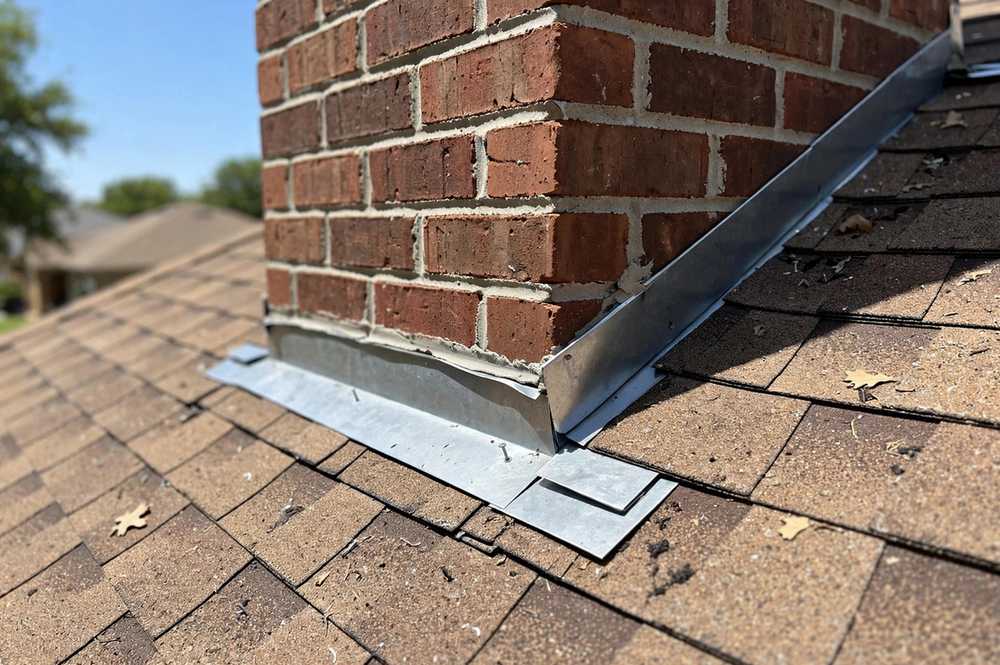
Full Leak Diagnosis
We trace the leak to its entry point, because the stain on the ceiling is rarely directly below the hole in the roof: water travels along the deck before it drips.
Every repair job from Kbron Roofing is a full system, not just the finish. The leak is traced, the failed detail is replaced, the surrounding slopes are checked, and you get the photos and the written scope.
We trace the leak to its entry point, because the stain on the ceiling is rarely directly below the hole in the roof: water travels along the deck before it drips.
Replacement shingles are matched to the existing material where we can, so the repair blends with the rest of the slope instead of standing out as a patch.
Failed flashing is replaced, not just resealed, at chimneys, walls, valleys and skylights, because sealant over failed flashing is the repair that brings us back next year.
We check the roof edge and the drainage path so water leaves the roof instead of backing under it, which is how a small repair stops a bigger one.
Debris is hauled off and the yard is magnet-swept before we leave, because a repair that leaves nails in the grass is not finished.
You get photos of the damage and the repair, plus a written scope of what was done and what to watch next, so the next decision about the roof is made with evidence.
Repair work is triage. A brown stain spreading on the ceiling after rain, shingles missing after a wind event, granule loss that shows in the gutters, a soft spot underfoot, or a limb on the roof each point to a different fix, and the wrong fix just moves the leak. The roof is inspected slope by slope, with the attic side of the deck and the flashing, before anything is touched, so the repair addresses the cause.
After a freeze, the triage is different again: a burst attic pipe can look exactly like a roof leak, and only a look in the attic tells them apart. If the roof is the problem, we fix it; if it is plumbing, we say so. A leak detection visit is the right first step when the source is not obvious, and a full inspection is the right step when the roof is 15 years old and you are not sure whether to repair or replace.
You will know what we found, what we fixed, and what to watch. Here is the sequence we run on every San Antonio repair, from the call to the water test.
Schedule
Call (254) 645-5833 during hours and describe the symptom and when it started: the stain, the missing shingles, the granules in the gutter. We set a time to look at the roof, and we look at the whole roof.
Diagnose
We inspect the slope and the attic, photograph the failure, and trace the water to its entry point, because the entry point is usually upslope and rooms away from the stain.
Fix
You get a written scope for the repair, naming the material and the flashing work involved, so you know exactly what is being fixed and what is being watched.
Finish
We complete the repair, photograph it, sweep the yard, and tell you what to watch next, then we test the repair with water before we leave.
Moisture meter
The moisture meter reads the deck and the flashing before we trust our eyes, because a deck that looks dry from above can be wet underneath, and a wet deck is the repair that fails first.
Infrared camera
The infrared camera shows the damp decking and the soft spot before the finish covers them, so a missed nail or a wet sheet is found while it can still be fixed.
Pry bar and roofing hammer
On a repair the pry bar and roofing hammer open the layers the leak is hiding under, showing us the deck and the old flashing before we decide what stays.
Chalk line and shingle cutter
We use the chalk line and shingle cutter on every repair visit, because a crooked course or a ragged cut is how a repair starts leaking in its first year.
Safety harness and roofing ladder
The safety harness and roofing ladder are how steep slopes get worked without rushing, because a repair done in a hurry on a steep pitch is a repair done twice.
Tape measure and speed square
On a repair the tape measure and speed square earn their keep on the first slope, marking the cut lines and the flashing dimensions so the new work fits the old roof.
Trace the entry point first
We follow trace the entry point first on repair work, because it is the part of the job a homeowner never sees and always depends on: the stain is the exit, not the entry.
Replace failed flashing, not just sealant
Replace failed flashing, not just sealant is the rule on every repair job we do in San Antonio, not an upgrade and not an extra: sealant over failed flashing is a temporary patch, not a repair.
Match the existing material where possible
For repair work, match the existing material where possible is what keeps the roof dry through hail season and the next hot summer, because a mismatched patch lifts at the edges.
Test the repair with water before leaving
We follow test the repair with water before leaving on repair work, because a repair that has not been tested is a promise, and a tested repair is a fact.
01
What we do: We check the roof and the attic, photograph the failure, and trace the stain back to its entry point, which is usually upslope from where the water shows up inside.
The homeowner keeps photos of the damage and a written scope for the roof repair work, so the next step is a decision, not a guess.
02
What we do: We walk every slope, note the wear and the flashing, and count what the wind actually took, instead of guessing from the shingles in the yard.
The roof repair scope is written, the photos are in hand, and the homeowner can act on the roof with the evidence in front of them.
03
What we do: We inspect the roof, photograph the damage, and measure the remaining life plainly, so a buyer and their inspector get a report they can read instead of a guess.
The homeowner gets a written scope for the roof repair work, with photos of the roof as it stands and a clear next step.
04
What we do: We look at every slope and the attic side of the deck, document what we find with photos, and compare the age of the roof against the repairs it has already had.
The roof is documented, the roof repair work is scoped, and the homeowner decides with the evidence in hand rather than a guess.
San Antonio roofs fail at details: a cracked pipe boot, a valley full of oak leaves, flashing that gave up after twenty summers. We fix the detail and check the rest of the roof while we are up there, because a roof that fails at one detail usually has another one coming.
Thousand Oaks
Thousand Oaks dates to the 1980s, which puts its roofs on their second or third covering, and the repairs there are usually about age: granule loss, curling, and flashing that has moved with the frame.
Stone Oak
Stone Oak's 1990s and newer streets bring their own repair pattern, with tile-heavy streets beside architectural shingle ones and HOA rules that name the material and the colour.
Monte Vista
In Monte Vista the repair work follows the neighbourhood: early-20th-century houses with steep, complex roofs under mature live oaks, many of them in a historic district where the material is reviewed first.
Beacon Hill
Beacon Hill's bungalows sit between downtown and Alamo Heights, with modest pitches and mature trees, and the repairs there are usually flashing and boots before they are shingles.
Spring hail season across Bexar County
Spring hail season across Bexar County runs March through May, when about 85 percent of the large-hail reports fall, and a repair done in April is checked against the hail the roof has already taken.
Summer UV and 100-degree heat
Summer UV and 100-degree heat cracks pipe boots and dries out sealant, so the repair scope names the boots and the flashing, not just the shingles.
Live-oak debris in valleys
When we plan repair work, live-oak debris in valleys is on the list from the first look, because a valley full of leaves holds water against the shingles and rots the deck from below.
Freeze events and burst attic pipes
Freeze events and burst attic pipes shape how repair work is done in this city: after a hard freeze, a stain that looks like a roof leak is often a burst pipe in the attic, and only a look in the attic tells them apart.
Most roofs do not fail all at once. They fail at a flashing detail, a cracked boot, or a slope that lost its granules, and the damage spreads from the detail outward, which is why the first look is always at the details.
Problem
An active leak with water coming through the ceiling means the water has already travelled along the deck, so the repair starts upslope from the drip, not under it.
Our Fix
We address an active leak with water coming through the ceiling at its source as part of the roof repair work, and we show you photos of the repair when it is done.
Problem
Missing or wind-lifted shingles after a storm leave the underlayment exposed, and the lifted tabs around the bare patch are the next ones to go in the next wind.
Our Fix
We fix the cause of the missing or wind-lifted shingles after a storm and photograph the repair, then check the slopes around it for the same failure.
Problem
On a repair job, hail-bruised shingles that are not leaking yet are a common find: the mat is broken, the granules are shedding, and the leak is a season or two away.
Our Fix
The fix for hail-bruised shingles that are not leaking yet is part of the repair scope, written down with the material named, and tested before we leave.
Problem
Soft decking under a sagging slope means the deck has been wet for a long time, and it is found by walking the roof and feeling the give underfoot, not from the driveway.
Our Fix
We address soft decking under a sagging slope at its source as part of the roof repair work, and we show you photos of the repair when it is done.
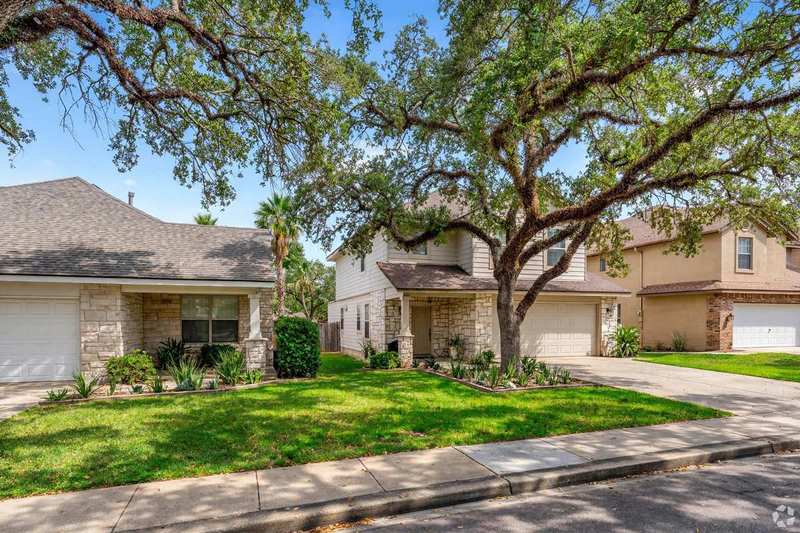
A single missing shingle can rot a sheet of decking in one rainy season, and the leak shows up in the ceiling far from the hole. A repair now costs far less in disruption than a deck replacement later. If the roof is near the end of its life, see when replacement makes more sense.
The entry point found, not guessed
The entry point found, not guessed is one of the reasons homeowners choose our roof repair work, and it is in the written scope: the stain is the exit, and the repair is at the entry.
Flashing replaced, not just sealed
Flashing replaced, not just sealed is built into the roof repair work, not added on top of it, and it is what keeps the repair dry through hail season and the next hot summer.
Photos of the damage and the fix
With roof repair, photos of the damage and the fix is the difference between a roof that holds and a roof that leaks again, because you can see what was wrong and what changed.
A written scope you can keep
A written scope you can keep is one of the reasons homeowners choose our roof repair work, and it is in the written scope: what was done, what was watched, and what comes next.
Kbron Roofing holds 5.0 out of 5 from 18 Google reviews, all 5-star. Reviewers name Rene Vargas as their contact and describe honest, no-pressure service. Read short verbatim excerpts from those reviews in the Roof Repair testimonials below.
We repair the roofs San Antonio actually has, from three-tab ranches to architectural shingle two-stories, and we show you photos of the failure before we fix it. Call (254) 645-5833 during hours.

Short verbatim excerpts from Google reviews by customers who chose our roof repair work. All five readable reviewers gave 5 stars two months ago; three are quoted below.
"Rene took a genuine, zero-pressure approach. He is remarkably honest, transparent, and truly puts the customer's best interest first."
Imanii Roberson
★★★★★ · Homeowner, San Antonio · 2 months ago · Roof repair for storm and wind damage
"He worked with my insurance and made it so easy. Definitely recommend them to anyone, just hear them out because I am very glad I did."
Joshua Garza
★★★★★ · Homeowner, San Antonio · 2 months ago · Storm and wind repair, roof installation
"Rene is incredibly honest, hardworking, and dedicated to his customers. He takes the time to truly understand your needs and delivers quality work and results at a price that won't break your wallet."
Joe Favor
★★★★★ · Homeowner, San Antonio · 2 months ago · Roof inspection, roof installation, storm and wind repair
Real answers to the questions we hear most often about roof repair in San Antonio, starting with where a leak actually comes from.
Roof Replacement is the natural next step after roof repair on a roof that needs more than one kind of attention.
View Roof ReplacementLeak Detection and Repair pairs with roof repair on many San Antonio homes, and the two scopes are written together so nothing is missed.
View Leak Detection and RepairWhere roof repair work raises a question, roof inspection is often the answer, and we scope it in the same visit.
View Roof InspectionHail Damage Roof Repair is the natural next step after roof repair on a roof that needs more than one kind of attention.
View Hail Damage Roof RepairRoof Maintenance pairs with roof repair on many San Antonio homes, and the two scopes are written together so nothing is missed.
View Roof MaintenanceWhere roof repair work raises a question, residential roofing is often the answer, and we scope it in the same visit.
View Residential RoofingCall us at (254) 645-5833 or send a message and we will get back to you during business hours. We schedule repairs Monday to Saturday, 6 AM to 8 PM.
Phone
(254) 645-5833Address
6 Irongate Creek, San Antonio, TX 78238, United States, San Antonio, Texas
Hours
Mon–Sat: 6 AM – 8 PM