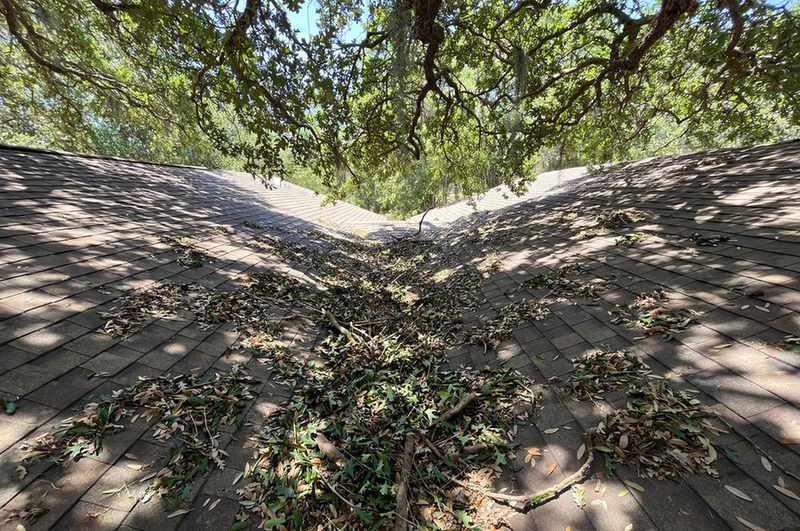
Full Roof Inspection
We inspect the full roof, slope by slope, instead of judging it from the driveway, because hail bruising and lifted tabs do not show from the ground.
Maintenance is a visit, not a promise. The roof is inspected, the valleys are cleared, the penetrations are resealed, the small failures are fixed, and you get a written report with photos.
We inspect the full roof, slope by slope, instead of judging it from the driveway, because hail bruising and lifted tabs do not show from the ground.
Flashing and sealant are repaired at chimneys, walls, valleys and skylights, where most roofs fail, and failed flashing is replaced rather than resealed.
Shingles that are missing, lifted or bruised are replaced and matched to the existing material where we can, so the repair blends with the rest of the slope.
Gutters and downspouts are cleared of oak leaves and debris, because a blocked drainage path backs water under the edge and rots the deck from below.
You get a written report and photos, so the condition of the roof is a document you can keep and act on, instead of a conversation you have to remember.
Roof maintenance in San Antonio actually covers the whole roof, once a year and after every hail season: the surface, the flashing, the valleys, the gutters, and the attic side of the deck. The city's roofs live under live oaks, in 100-degree summers, and through a hail season that runs March through May, so the maintenance visit is timed to that calendar, not to a general schedule.
Oak wilt sets the other calendar rule. Do not prune or wound oaks from 1 February through 30 June, and paint every wound immediately. We plan maintenance around that window and around the roof’s age: a roof that has not been looked at in three or more years, a roof that survived a hail or wind event without an inspection, and a home under heavy oak cover all need a visit. A full inspection is the right step when the roof is 12 or more years old.
How our roof tune-up visits work: the same sequence, every time, so nothing on the roof goes unlooked at.
Schedule
Call (254) 645-5833 during hours and tell us when the roof was last looked at. We set a time for the visit, and we look at the whole roof, not just the spot that worries you.
Diagnose
We inspect every slope, photograph the wear and the flashing, and check the attic side of the deck, marking what needs fixing now and what needs watching.
Fix
You get a written scope for the work your roof actually needs, with the material and the flashing work named, and the photos to back every line of it.
Finish
We finish the visit, photograph the details, clear the valleys and the gutters, and hand you the report before we leave.
Moisture meter
We use the moisture meter on every maintenance visit, because a deck that looks dry from above can be damp underneath, and a damp deck is the failure that shows up next year.
Pry bar and roofing hammer
The pry bar and roofing hammer are how we check the layers a tune-up has to reach, opening the flashing and the shingles to see the deck beneath.
Chalk line and shingle cutter
On a maintenance job the chalk line and shingle cutter mark the cuts and the measurements, so the small replacements fit the old roof instead of standing out as patches.
Roofing nail gun
We use the roofing nail gun on every maintenance visit to set the replacement shingles to the same depth as the rest of the roof, so they hold through the next squall line.
Safety harness and roofing ladder
The safety harness and roofing ladder are how steep slopes get worked without rushing, because a tune-up done in a hurry is a tune-up done twice.
Caulking gun and roof sealant
On a maintenance job the caulking gun and roof sealant close the small gaps at penetrations and transitions, the places where a roof most often starts leaking.
Valleys cleared first
We follow valleys cleared first on maintenance work, because a valley full of oak leaves holds water against the shingles and the deck underneath.
Penetrations resealed, flashing replaced where failed
Penetrations resealed, flashing replaced where failed is the rule on every maintenance visit we do in San Antonio: sealant for the small gaps, new flashing where the flashing has failed.
Photos of every finding
For maintenance, photos of every finding is what makes the report useful, so the condition of the roof is a document, not a conversation.
Annual cadence after oak drop
We follow annual cadence after oak drop on maintenance work, because the late-February-to-March leaf and catkin fall is the moment the valleys fill, and the visit is timed to clear them before the spring storms.
01
What we do: We inspect the roof slope by slope, photograph the wear and the flashing, and measure the age against the 15-to-20-year life architectural shingles commonly get in this heat, because a roof that has not been looked at in three years has a story to tell.
The homeowner gets a written scope for the maintenance work, with photos of the worn slopes and a clear statement of what needs fixing now and what needs watching.
02
What we do: We mark and photograph the hail hits slope by slope, because a roof that survived a hail or wind event without an inspection may be bruised without leaking yet.
The roof is documented, the maintenance work is scoped, and the homeowner decides with the evidence in hand rather than a guess.
03
What we do: We clear the valleys and the gutters, check the flashing under the oak cover, and look for the limb damage and the leaf load that heavy tree cover brings.
The homeowner keeps photos of the damage and a written scope for the maintenance work, so the next step is a decision, not a guess.
04
What we do: We read the roof's age plainly: granule loss, curling, bruising, and the years it has already given, and we say whether maintenance is still enough or whether the roof is near the end of its life.
The maintenance report is written, the photos are in hand, and the homeowner can act on the roof with the evidence in front of them.
San Antonio roofs live under live oaks, in 100-degree summers, and through a hail season that runs March through May. Maintenance is planned around those three facts, and the visit is timed to the calendar the city actually keeps.
Monte Vista
Monte Vista's early-20th-century houses carry steep, complex roofs under mature live oaks, and many sit in a historic district, so the maintenance visit notes the material and the profile as well as the wear.
Mahncke Park
In Mahncke Park the maintenance work follows the neighbourhood: the San Antonio part of the 78209 area beside Fort Sam Houston, with early-20th-century houses and mature trees over the roof.
Beacon Hill
Beacon Hill's bungalows sit between downtown and Alamo Heights, with modest pitches and mature trees, and the maintenance there is usually about valleys and boots before it is about shingles.
Thousand Oaks
Thousand Oaks dates to the 1980s, which puts its roofs on their second or third covering, and the maintenance there is usually about age: granule loss, curling, and flashing that has moved with the frame.
Stone Oak
Stone Oak's 1990s and newer streets bring their own maintenance pattern, with tile-heavy streets beside architectural shingle ones and HOA rules that name the material and the colour.
Live-oak leaf and catkin fall, late February to March
Live-oak leaf and catkin fall, late February to March, is the moment the valleys fill, and the maintenance visit is timed to clear them before the spring storms arrive.
Spring hail season, March through May
Spring hail season, March through May, is part of every maintenance job here, because about 85 percent of the large-hail reports fall in those three months.
Summer UV and 100-degree heat
When we plan maintenance work, summer UV and 100-degree heat is on the list from the first look, because the granule loss is read slope by slope, with the south and west slopes ageing first.
Oak-wilt pruning window, 1 February to 30 June
Oak-wilt pruning window, 1 February to 30 June, shapes how maintenance work is done in this city: oaks are not pruned or wounded in those months, and every oak wound is painted immediately, any month of the year.
Most roofs do not fail all at once. They fail at a flashing detail, a cracked boot, or a slope that lost its granules, and the maintenance visit is the moment those details are found, while they are still small.
Problem
Small leaks that only show up after heavy rain usually mean the water has been travelling along the deck for a while, so the entry point is upslope and rooms away from the stain.
Our Fix
We trace the small leak back to its entry point, fix the cause, and photograph the repair, so the next heavy rain is a test the roof passes instead of a surprise.
Problem
Hail damage that does not leak right away still breaks the shingle mat, and the granule loss that follows lets UV at the asphalt, which is how a bruise becomes a leak a season or two later.
Our Fix
We document hail damage that does not leak right away slope by slope, so the maintenance scope names the damage while it is still small.
Problem
Debris holding water in valleys is the most San Antonio of roof problems: live-oak leaves fill the valley, the water sits against the shingles, and the deck underneath rots.
Our Fix
We clear the debris holding water in valleys and check the deck underneath for soft spots, because a cleared valley over a rotted deck is a repair that fails next year.
Problem
Failed flashing at chimneys and skylights is the most common leak source on an ageing roof, because the flashing moves with the frame and the sealant gives up first.
Our Fix
We replace the failed flashing at chimneys and skylights during the maintenance visit, and the report names what was replaced and what was only resealed.
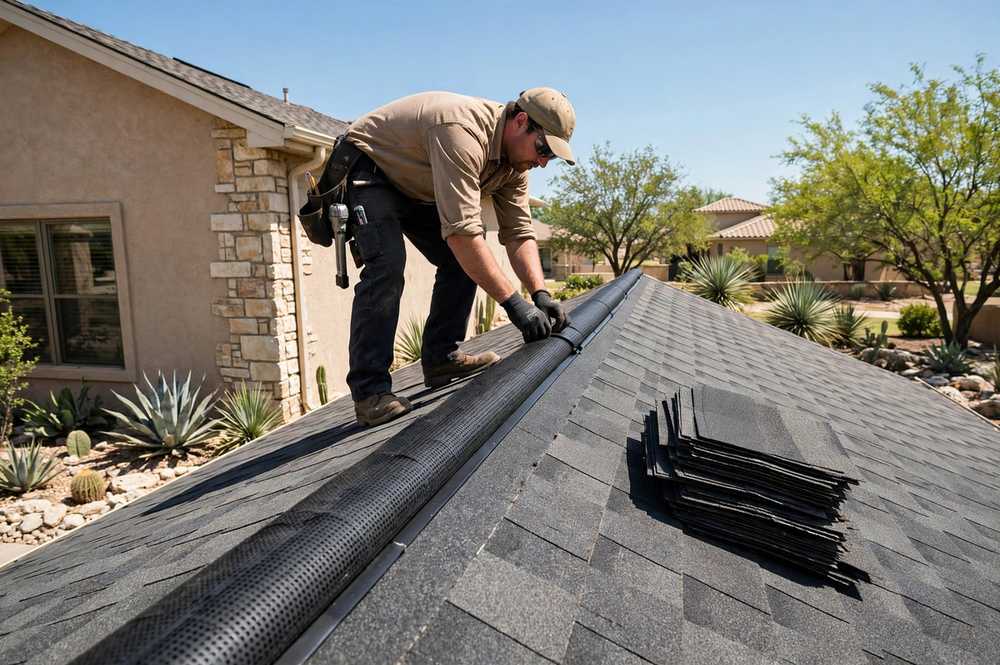
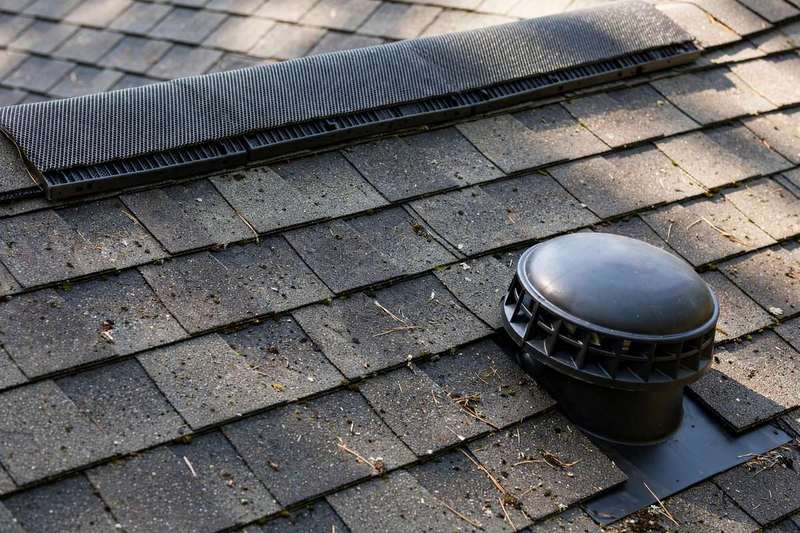
A maintained roof reaches the top of its expected life instead of the bottom of it. The visit is short, the report is written, and the next hail season arrives with the roof already checked. Pair it with balanced attic ventilation and the roof ages slower still.
Valleys cleared before storm season
Valleys cleared before storm season is one of the reasons homeowners choose our roof maintenance work, because a valley full of oak leaves is a leak waiting for the first spring storm.
Penetrations resealed each year
Penetrations resealed each year is built into the roof maintenance work, not added on top of it, so the boots and the flashing are checked before they fail, not after.
Small failures caught early
With roof maintenance, small failures caught early is the difference between a visit that costs a little and a repair that costs a lot, because a cracked boot is cheap and a rotted deck is not.
A written report with photos
A written report with photos is one of the reasons homeowners choose our roof maintenance work, because the condition of the roof is a document you can keep and act on.
Kbron Roofing holds 5.0 out of 5 from 18 Google reviews, all 5-star. Reviewers name Rene Vargas as their contact and describe honest, no-pressure service. Read short verbatim excerpts from those reviews in the Roof Maintenance testimonials below.
We maintain the roofs San Antonio actually has, from bungalows under mature oaks to two-stories in the master-planned north. Call (254) 645-5833 during hours to schedule a visit.
Short verbatim excerpts from Google reviews by customers who chose our roof maintenance work. All five readable reviewers gave 5 stars two months ago; three are quoted below.
"Rene is incredibly honest, hardworking, and dedicated to his customers. He takes the time to truly understand your needs and delivers quality work and results at a price that won't break your wallet."
Joe Favor
★★★★★ · Homeowner, San Antonio · 2 months ago · Roof inspection, roof installation, storm and wind repair
"He was so professional, walked me through the steps of how to make a claim with my insurance, and the whole process was super simple. The roof was installed in just one day, and the crew was incredibly clean and professional."
Donnovan Smith
★★★★★ · Homeowner, San Antonio · 2 months ago · Storm and wind repair, roof installation
"He worked with my insurance and made it so easy. Definitely recommend them to anyone, just hear them out because I am very glad I did."
Joshua Garza
★★★★★ · Homeowner, San Antonio · 2 months ago · Storm and wind repair, roof installation
Real answers to the questions we hear most often about roof maintenance in San Antonio, including the oak-wilt pruning window.
Roof Replacement is the natural next step after roof maintenance on a roof that needs more than one kind of attention.
View Roof ReplacementRoof Repair pairs with roof maintenance on many San Antonio homes, and the two scopes are written together so nothing is missed.
View Roof RepairWhere roof maintenance work raises a question, roof installation is often the answer, and we scope it in the same visit.
View Roof InstallationResidential Roofing is the natural next step after roof maintenance on a roof that needs more than one kind of attention.
View Residential RoofingRoof Inspection pairs with roof maintenance on many San Antonio homes, and the two scopes are written together so nothing is missed.
View Roof InspectionWhere roof maintenance work raises a question, attic ventilation is often the answer, and we scope it in the same visit.
View Attic VentilationCall us at (254) 645-5833 or send a message and we will get back to you during business hours. We schedule maintenance visits Monday to Saturday, 6 AM to 8 PM.
Phone
(254) 645-5833Address
6 Irongate Creek, San Antonio, TX 78238, United States, San Antonio, Texas
Hours
Mon–Sat: 6 AM – 8 PM