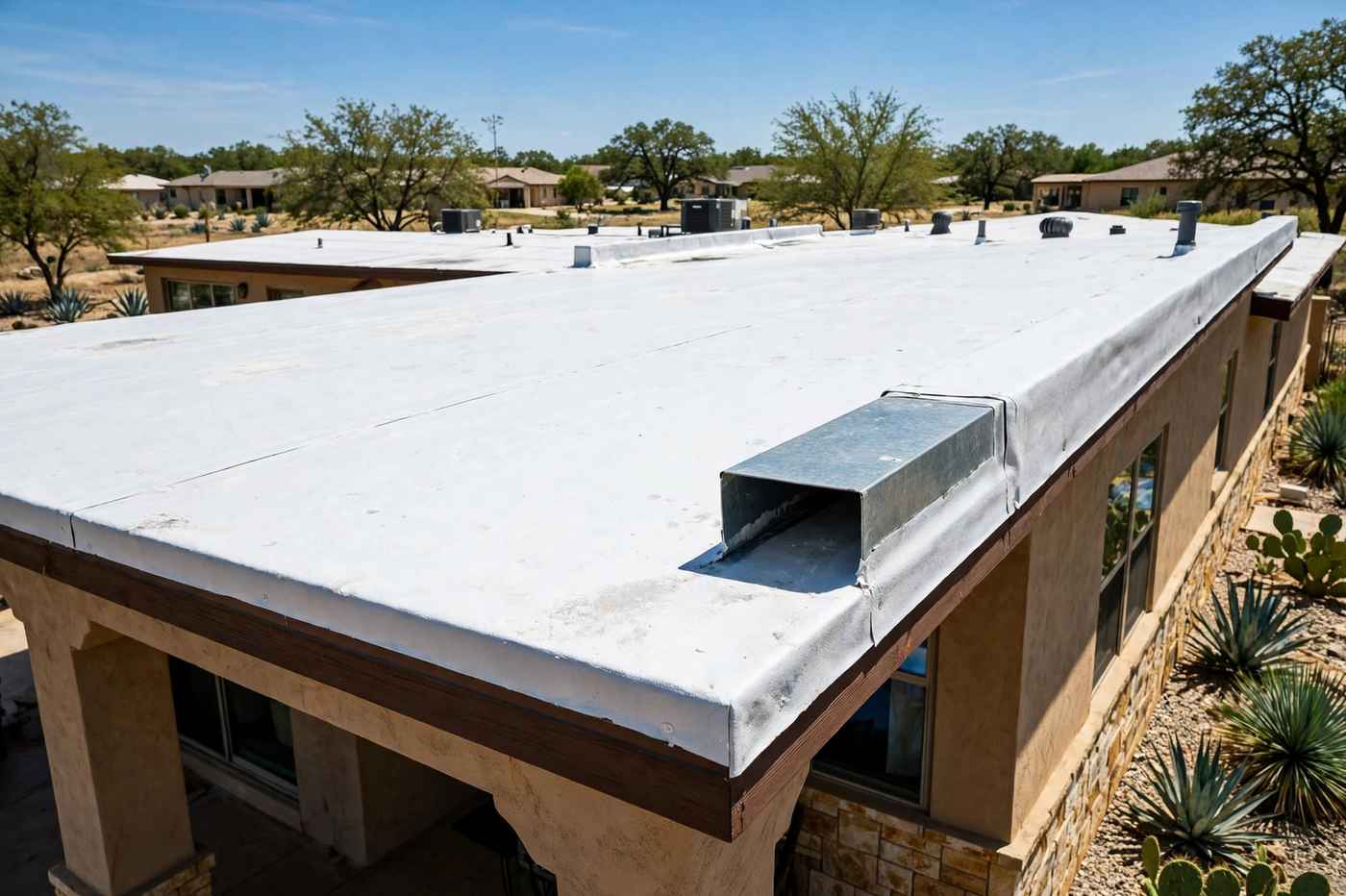
Full Roof Inspection
We inspect the full roof before anything is torn off, because a low-slope roof that ponds water has a drainage problem, and a membrane over a drainage problem is a leak waiting for rain.
A low-slope roof is judged by its drainage and its seams, not by its finish, and the installation is planned around both: water has to leave the roof, and the seams have to hold through the heat.
We inspect the full roof before anything is torn off, because a low-slope roof that ponds water has a drainage problem, and a membrane over a drainage problem is a leak waiting for rain.
The old membrane comes off in full and is disposed of, down to the deck, so the new roof sits on a sound structure instead of a wet one.
Membrane and insulation go on as one system, with the insulation tapered where the roof needs fall toward the drain, because a flat roof that holds water is a flat roof that leaks.
Flashing and penetration sealing close every curb, wall and pipe, because a low-slope roof leaks at the penetrations long before it leaks through the field.
Drainage and the roof edge are checked with water before the job is signed off, so the roof that is handed over is a roof that drains.
The final check and walk-through close the job: the membrane is inspected seam by seam, the drains are tested, and the finished roof is walked with you.
Flat roofing in San Antonio really involves water, not slope: a low-slope roof has to move heavy rain off a nearly flat surface, and the failure mode is ponding and seam failure from thermal movement, not shingle wear. The membranes are TPO, PVC, modified bitumen or EPDM, the realistic life is 15 to 25 years, and the roofs that carry them are usually mid-century modern houses and additions, where the drainage and the seams are the whole job.
On homes, low-slope roofs are usually over an addition, a garage or a porch, and the work is sized to the house, not to a warehouse. TPO and modified bitumen membranes are the common choices for these roofs. If the roof is over living space and the leak is hard to trace, a leak detection visit is the right first step, and a full inspection will show whether the membrane or the drainage is the problem.
How our flat roofing process works: drainage first, seams second, finish last, so the roof that is handed over is a roof that drains.
Schedule
Call (254) 645-5833 during hours and tell us what you are seeing: ponding after rain, a blister, a stain on the ceiling below. We set a time to inspect.
Diagnose
We inspect the membrane, the seams, the drains and the deck, photograph the wear, and check where the water sits after a rain.
Fix
You get a written scope for the flat roof, naming the membrane, the drainage work and the flashing, so the decision is specific.
Finish
We tear off, rebuild, test the drainage with water, photograph the seams, and walk the finished roof with you before we leave.
Moisture meter
The moisture meter is how we check flat roofing work before it is covered up, so a wet deck under the membrane is found while it can still be fixed.
Infrared camera
On a flat job the infrared camera earns its keep on the first slope, finding the damp insulation and the wet deck that the membrane hides.
Membrane roller and seamer
We use the membrane roller and seamer on every flat roofing job to close the seams to the membrane pattern, because a seam is only as good as the weld that closes it.
Pry bar and roofing hammer
The pry bar and roofing hammer are how we check the layers a flat roof hides, opening the membrane to see the deck and the insulation beneath.
Safety harness and roofing ladder
On a flat job the safety harness and roofing ladder are how the roof gets worked without rushing, because a low-slope roof is still a roof, and a rushed footing is how a good job turns into a bad day.
Caulking gun and roof sealant
We use the caulking gun and roof sealant on every flat job for the small gaps at penetrations and curbs, the places where a low-slope roof most often starts leaking.
Tape measure and speed square
The tape measure and speed square are how we check flat roofing work before it is covered up, marking the falls and the drain positions so the water has somewhere to go.
Drainage checked before the membrane
Drainage checked before the membrane is the rule on every flat job we do in San Antonio: the falls and the drains are right before the membrane goes on, not after.
Seams sealed to the membrane pattern
For flat roofing, seams sealed to the membrane pattern is what keeps the roof dry through hail season and the next hot summer, because a seam closed to the wrong pattern opens with the heat.
Flashing at walls and curbs
We follow flashing at walls and curbs on flat roofing work, because a low-slope roof leaks at the walls and the curbs long before it leaks through the field.
Ponding checked with water
Ponding checked with water is the rule on every flat job we do in San Antonio: the roof is tested with water before it is signed off, and the water has to leave.
01
What we do: We check the drain and the falls, measure where the water sits after a rain, and photograph the ponding, because a flat roof over a garage addition that ponds water has a drainage problem, not a membrane problem.
The homeowner gets a written scope for the flat roofing work, with photos of the ponding and the drainage named, so the next step is a decision, not a guess.
02
What we do: We inspect the membrane, the seams and the penetrations, and trace the stain back to the seam or the curb that let the water in.
The roof is documented, the flat roofing work is scoped, and the homeowner decides with the evidence in hand rather than a guess.
03
What we do: We check the blistering and the wall flashing, and measure the fall toward the drain, because a porch roof that lets water in at the wall is usually a flashing failure, not a membrane failure.
The homeowner keeps photos of the damage and a written scope for the flat roofing work, so the next step is a decision, not a guess.
04
What we do: We read the roof's age and condition plainly, with no records to lean on, and say whether the flat porch roof has years left or whether the buyer will ask for a new one.
The flat roofing scope is written, the photos are in hand, and the homeowner can act on the roof with the evidence in front of them.
San Antonio's hard rains test a low-slope roof harder than any other roof in the city, because the water has to be moved off a nearly flat surface, and the failure is ponding, not wear.
Mahncke Park
Mahncke Park homes bring their own flat roofing pattern, with early-20th-century houses beside Fort Sam Houston where low-slope additions and porch roofs are common.
Beacon Hill
In Beacon Hill the flat roofing work follows the neighbourhood: bungalows between downtown and Alamo Heights, with modest pitches, mature trees, and low-slope porch roofs.
Monte Vista
Monte Vista is one of the San Antonio neighbourhoods where flat roofing work is shaped by the houses themselves, with steep complex roofs beside mid-century low-slope additions.
Dignowity Hill
Dignowity Hill homes bring their own flat roofing pattern, with Victorian-era houses on the Near East Side where low-slope additions sit beside steep historic roofs.
Thousand Oaks
In Thousand Oaks the flat roofing work follows the neighbourhood: 1980s streets where garage additions and porch roofs carry the low-slope work.
Heavy rain after hail season
Heavy rain after hail season is part of every flat job here, because the spring storms bring both hail and the rain that tests the drainage.
Summer UV and 100-degree heat
When we plan flat roofing work, summer UV and 100-degree heat is on the list from the first look, because the membrane and the seams move with the heat.
Thermal movement opening seams
Thermal movement opening seams shapes how flat roofing work is done in this city: the membrane expands and contracts with the temperature, and the seams are welded to the pattern that lets them move.
Ponding after heavy rain
Ponding after heavy rain is part of every flat job here, and the roof is tested with water before it is signed off, because a roof that holds water is a roof that leaks.
Low-slope roofs fail at the drainage and the seams, and the membrane hides both until the water shows up inside. The inspection starts with where the water sits after a rain.
Problem
Ponding water after heavy rain means the falls or the drain are wrong, and a membrane that holds water is a membrane that leaks, sooner or later.
Our Fix
We fix the ponding by rebuilding the falls and the drain detail, so the water leaves the roof instead of sitting on it.
Problem
Seam failure from thermal movement happens when the membrane expands and contracts with the heat and the seam was welded to the wrong pattern, or not welded at all.
Our Fix
The fix for seam failure from thermal movement is to re-weld the seams to the membrane pattern, because a seam closed with sealant instead of a weld opens again with the next summer.
Problem
Hail marks on a low-slope membrane are usually bruises in the membrane surface, and the damage is found by walking the roof, not from the driveway.
Our Fix
We document the hail marks on a low-slope membrane and repair the bruised sections, so the scope names the damage while it is still small.
Problem
Flashing failure at walls and curbs is the most common leak source on a low-slope roof, because the membrane meets the wall at a curb and the sealant gives up first.
Our Fix
We replace the flashing failure at walls and curbs during the flat work, and the scope names what was replaced and what was only resealed.
Problem
Water backing under the roof edge happens when the drainage path is blocked or the edge flashing has failed, and it wets the deck from below instead of above.
Our Fix
The fix for water backing under the roof edge is to open the drainage path and repair the edge flashing, then check the deck underneath for soft spots.
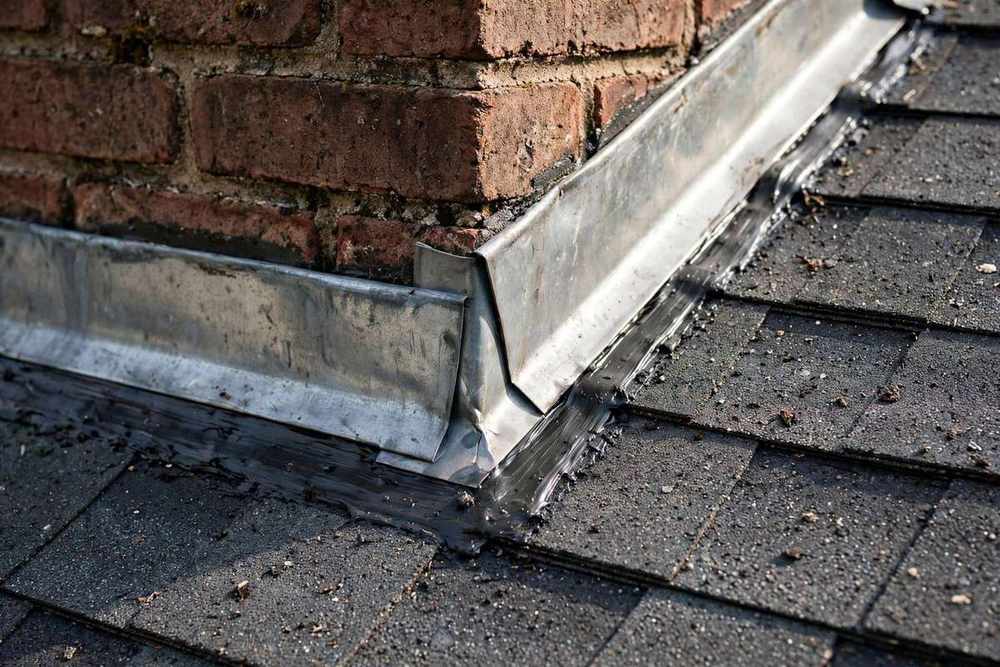
A low-slope roof that drains is a roof that lasts. The membrane, the seams and the drains are one system, and the check at the end is water on the roof, not a promise. See leak detection if the entry point is not obvious.
Drainage fixed, not just patched
Drainage fixed, not just patched is built into the flat roofing work, not added on top of it, because a low-slope roof that holds water is a low-slope roof that leaks.
Seams sealed to the membrane pattern
With flat roofing, seams sealed to the membrane pattern is the difference between a roof that holds through the summer and a roof that opens with the heat.
Flashing at walls and curbs
Flashing at walls and curbs is one of the reasons homeowners choose our flat roofing work, because a low-slope roof leaks at the walls and the curbs long before it leaks through the field.
Ponding checked with water
Ponding checked with water is built into the flat roofing work, not added on top of it, so the roof that is handed over is a roof that drains.
Kbron Roofing holds 5.0 out of 5 from 18 Google reviews, all 5-star. Reviewers name Rene Vargas as their contact and describe honest, no-pressure service. Read short verbatim excerpts from those reviews in the Flat Roofing testimonials below.
We work on residential low-slope roofs across San Antonio, from mid-century homes to additions, and we show you the membrane before we cover it. Call (254) 645-5833 during hours.
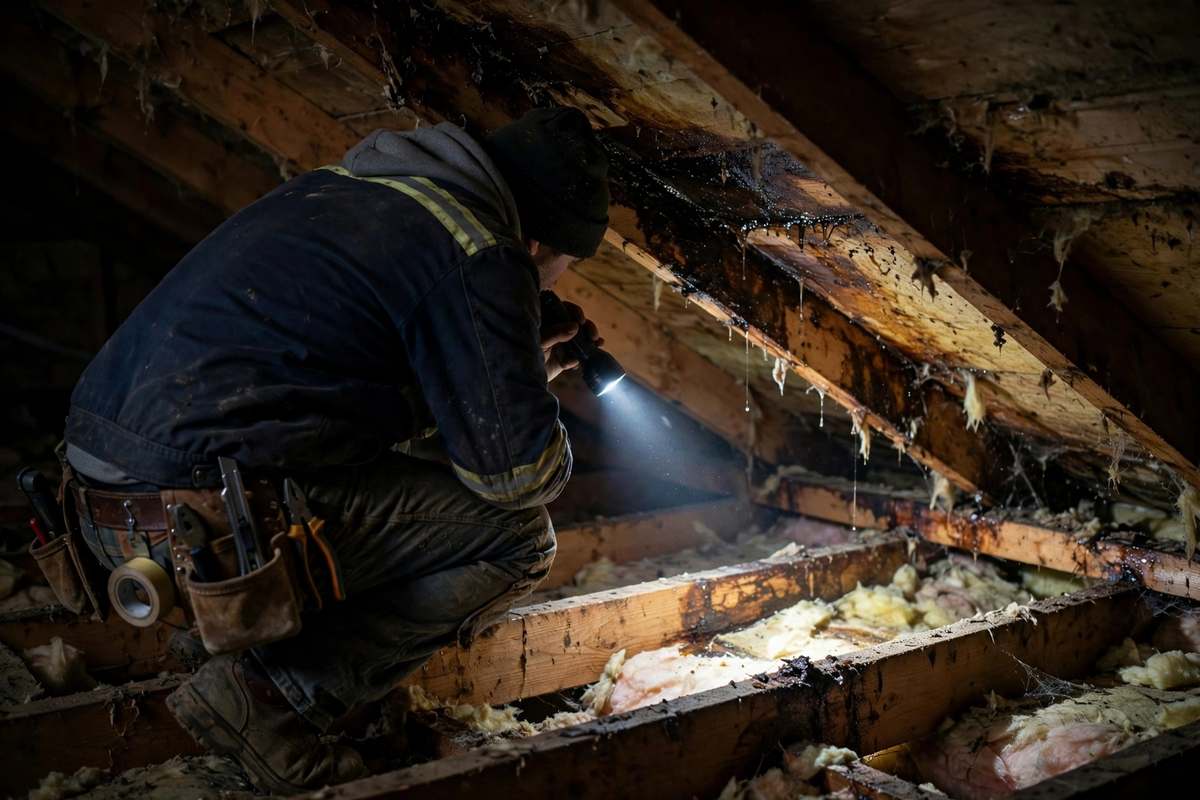
Short verbatim excerpts from Google reviews by customers who chose our flat roofing work. All five readable reviewers gave 5 stars two months ago; three are quoted below.
"Rene is incredibly honest, hardworking, and dedicated to his customers. He takes the time to truly understand your needs and delivers quality work and results at a price that won't break your wallet."
Joe Favor
★★★★★ · Homeowner, San Antonio · 2 months ago · Roof inspection, roof installation, storm and wind repair
"Rene took a genuine, zero-pressure approach. He is remarkably honest, transparent, and truly puts the customer's best interest first."
Imanii Roberson
★★★★★ · Homeowner, San Antonio · 2 months ago · Roof repair for storm and wind damage
"He was so professional, walked me through the steps of how to make a claim with my insurance, and the whole process was super simple. The roof was installed in just one day, and the crew was incredibly clean and professional."
Donnovan Smith
★★★★★ · Homeowner, San Antonio · 2 months ago · Storm and wind repair, roof installation
Real answers to the questions we hear most often about flat roofing in San Antonio, including why a flat roof ponds water.
Roof Replacement pairs with flat roofing on many San Antonio homes, and the two scopes are written together so nothing is missed.
View Roof ReplacementWhere flat roofing work raises a question, leak detection and repair is often the answer, and we scope it in the same visit.
View Leak Detection and RepairRoof Inspection is the natural next step after flat roofing on a roof that needs more than one kind of attention.
View Roof InspectionResidential Roofing pairs with flat roofing on many San Antonio homes, and the two scopes are written together so nothing is missed.
View Residential RoofingWhere flat roofing work raises a question, roof repair is often the answer, and we scope it in the same visit.
View Roof RepairRoof Maintenance is the natural next step after flat roofing on a roof that needs more than one kind of attention.
View Roof MaintenanceCall us at (254) 645-5833 or send a message and we will get back to you during business hours. We schedule flat roof work Monday to Saturday, 6 AM to 8 PM.
Phone
(254) 645-5833Address
6 Irongate Creek, San Antonio, TX 78238, United States, San Antonio, Texas
Hours
Mon–Sat: 6 AM – 8 PM