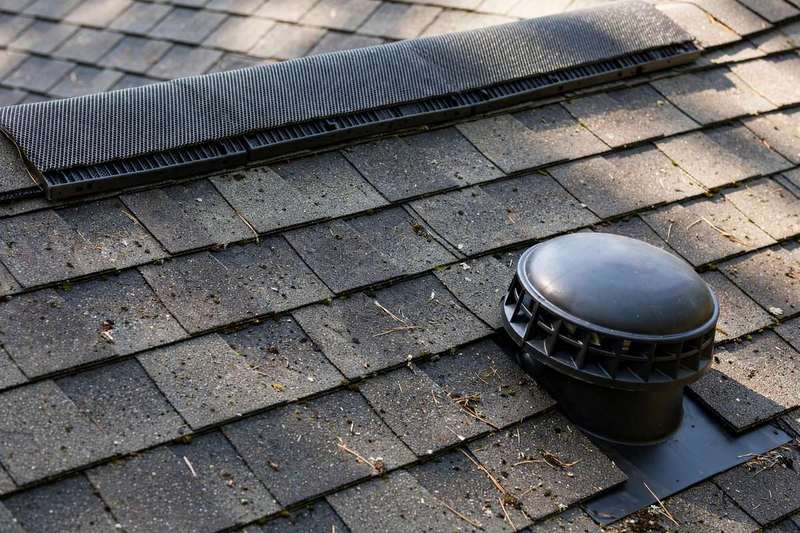
Ridge Vent
A ridge vent runs along the full ridge, so the hot air has somewhere to go, and the vent is checked for length, not just for presence, because a short ridge vent is a vent that does not work.
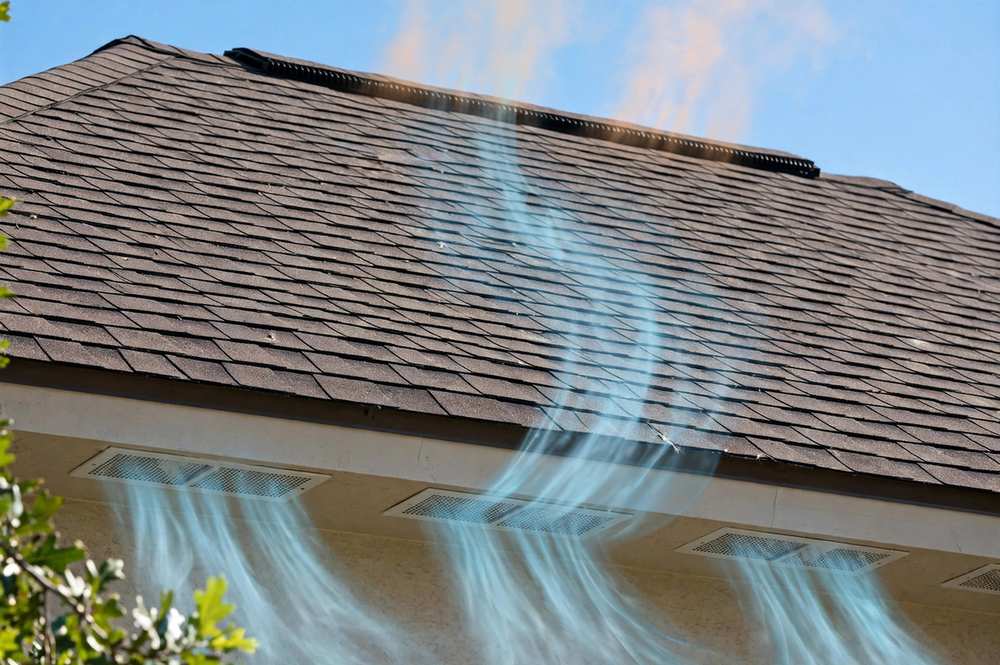
Attic ventilation is a balance, not a vent. Intake at the soffit and exhaust at the ridge have to match, or the attic stores heat instead of moving air, and the shingles above it age early.
A ridge vent runs along the full ridge, so the hot air has somewhere to go, and the vent is checked for length, not just for presence, because a short ridge vent is a vent that does not work.
Soffit intake is checked at every eave, because the intake is the half of the balance most often blocked, by paint, by insulation, or by a soffit that was never opened.
The ventilation balance is checked as a system, intake against exhaust, so the attic moves air instead of storing heat above the rooms below.
Blocked intake is cleared, not just added to, because a new vent over a blocked soffit is a vent that does nothing.
The attic heat check measures the attic against the roof above it, looking for the heat that ages shingles from below and the moisture that rots the deck.
The final walk-through and photos close the job: the intake and the exhaust are photographed, and the balance is written down.
Attic ventilation in San Antonio really involves the heat, not just the vents. The city has more than a hundred days a year above 90 degrees, and in 2025 it had 162, the most on record, so an attic that cannot breathe runs far hotter than the air outside and cooks the shingles from below. Trade sources describe poorly ventilated attics reaching 130 to 150 degrees, and the work is to balance the intake at the soffit with the exhaust at the ridge, clear what is blocked, and check the attic for heat and moisture.
The heat-ageing mechanism is simple. A shingle in San Antonio is heated from above by the sun and from below by the attic, and the hotter the attic, the faster the asphalt loses the oils that keep it flexible. Granule loss follows, then curling, then leaks. Ventilation does not stop hail, and it does not replace a worn roof, but it is the cheapest way to slow the ageing on the roof you have. Pair it with a roof inspection that looks at the attic, and with seasonal maintenance that keeps the vents clear.
How our attic ventilation process works: measure the attic, balance the vents, clear what is blocked, in that order.
Schedule
Call (254) 645-5833 during hours and tell us what you are seeing: an air conditioner that cannot keep up, granules shedding fast, a musty attic. We set a time to look.
Diagnose
We inspect the attic and the roof, photograph the intake and the exhaust, and check the deck for heat and moisture, so the scope is written from the attic in front of us.
Fix
You get a written scope for the ventilation work, naming the intake, the exhaust and the clearing, so the decision is specific.
Finish
We balance the vents, clear the intake, photograph the work, and walk the finished job with you before we leave.
Moisture meter
The moisture meter is how we check attic ventilation work before it is covered up, so a damp deck under the shingles is found while it can still be fixed.
Infrared camera
On a ventilation job the infrared camera earns its keep on the first slope, finding the hot spots and the damp decking the attic hides.
Flashlight and attic probe
We use the flashlight and attic probe on every ventilation visit to read the deck and the insulation from below, where the heat and the moisture leave their first marks.
Chalk line
The chalk line is how we check attic ventilation work before it is covered up, marking the vent layout so the intake and the exhaust fall where they should.
Safety harness and roofing ladder
On a ventilation job the safety harness and roofing ladder earn their keep on the first slope, because a steep pitch is worked without rushing or not at all.
Tape measure and speed square
We use the tape measure and speed square on every ventilation visit to measure the ridge and the soffit, so the balance is calculated, not guessed at.
Intake and exhaust balanced together
Intake and exhaust balanced together is the rule on every ventilation job we do in San Antonio: the soffit intake and the ridge exhaust have to match, or the attic stores heat.
Soffit intake cleared, not just added
For attic ventilation, soffit intake cleared, not just added is what keeps the attic breathing, because a new vent over a blocked soffit is a vent that does nothing.
Ridge vent along the full ridge
We follow ridge vent along the full ridge on ventilation work, because a short ridge vent is a vent that does not work, and the hot air has nowhere to go.
Attic checked for heat and moisture
Attic checked for heat and moisture is the rule on every ventilation job we do in San Antonio, because the heat ages the shingles from below and the moisture rots the deck.
01
What we do: We measure the attic against the roof above it, check the intake and the exhaust, and look for the heat that is making the air conditioner work harder, because a home where the air conditioner cannot keep up in August usually has an attic that cannot breathe.
The homeowner gets a written scope for the attic ventilation work, with photos of the intake and the exhaust and a clear statement of what the attic needs.
02
What we do: We read the granule loss slope by slope, check the attic heat, and measure the roof against its age, because a 20-year-old shingle roof losing granules fast is often a ventilation failure, not just an old roof.
The roof is documented, the attic ventilation work is scoped, and the homeowner decides with the evidence in hand rather than a guess.
03
What we do: We check the ridge vent for length and the soffit intake for blockage, because a new roof that still runs hot in the attic usually has a vent that is too short or an intake that is blocked.
The homeowner keeps photos of the damage and a written scope for the attic ventilation work, so the next step is a decision, not a guess.
04
What we do: We check the attic for moisture on the deck and the musty smell that travels with it, and we name the entry point instead of guessing at the stain.
The attic ventilation scope is written, the photos are in hand, and the homeowner can act on the roof with the evidence in front of them.
San Antonio summers run to 100 degrees, and an unvented attic runs hotter still, cooking the shingles from below while the sun cooks them from above. Ventilation is planned around that heat, not around a standard vent count.
Monte Vista
Monte Vista homes bring their own attic ventilation pattern, with early-20th-century houses, steep complex roofs, and attics that were never built to breathe.
Thousand Oaks
In Thousand Oaks the attic ventilation work follows the neighbourhood: 1980s streets on their second or third roof, where the decision is usually about age, not about one storm.
Beacon Hill
Beacon Hill is one of the San Antonio neighbourhoods where attic ventilation work is shaped by the houses themselves, with bungalows between downtown and Alamo Heights and modest pitches.
Mahncke Park
Mahncke Park homes bring their own attic ventilation pattern, with early-20th-century houses beside Fort Sam Houston and mature trees over the roof.
Stone Oak
In Stone Oak the attic ventilation work follows the neighbourhood: 1990s and newer streets, tile-heavy blocks beside architectural shingle ones, and HOA rules that name the material and the colour.
Summer UV and 100-degree heat
Summer UV and 100-degree heat is part of every ventilation job here, and the attic that cannot breathe runs far hotter than the air outside.
Attic heat ageing shingles from below
When we plan attic ventilation work, attic heat ageing shingles from below is on the list from the first look, because the heat cooks the mat and the granules shed early.
Live-oak debris blocking vents
Live-oak debris blocking vents shapes how attic ventilation work is done in this city, because the late-February-to-March leaf and catkin fall fills the soffit vents as surely as it fills the valleys.
South and west slopes age first
South and west slopes age first is part of every ventilation job here, because the afternoon sun is the fastest ageing force on a San Antonio roof, and the attic heat makes it faster.
Ventilation problems hide in the attic, and the roof shows them late: the granules shed early, the shingles curl, and the air conditioner works harder, all because the attic cannot breathe.
Problem
Soffit intake painted shut or blocked is the most common ventilation failure, because the intake is the half of the balance most often blocked, by paint, by insulation, or by a soffit that was never opened.
Our Fix
We clear the soffit intake painted shut or blocked and check the balance, because a new vent over a blocked soffit is a vent that does nothing.
Problem
Ridge vent missing or too short is the other half of the same failure: the hot air has nowhere to go, and the attic stores the heat instead of moving it.
Our Fix
We install the ridge vent missing or too short along the full ridge, so the exhaust matches the intake and the attic breathes.
Problem
Attic heat ageing shingles from below is the second roof killer in San Antonio, after hail, and it shows as granule loss and curling on the slopes above the hottest part of the attic.
Our Fix
We address attic heat ageing shingles from below by balancing the intake and the exhaust, so the attic moves air instead of storing heat.
Problem
Moisture on the attic deck usually means the attic is not moving air, and the moisture rots the deck from below while the shingles above it look sound.
Our Fix
We check the moisture on the attic deck, find where the air is not moving, and write the scope from the attic, not from the stain.
A new roof over a hot attic ages like an old roof. Balanced ventilation is the cheapest way to slow the ageing on the roof you have, and the only way to protect the roof you are about to buy. See roof replacement for the full system it protects.
Intake and exhaust balanced
Intake and exhaust balanced is built into the attic ventilation work, not added on top of it, because the soffit intake and the ridge exhaust have to match, or the attic stores heat.
Soffit cleared, not just added
With attic ventilation, soffit cleared, not just added is the difference between an attic that breathes and an attic that has a new vent over a blocked soffit.
Ridge vent along the full ridge
Ridge vent along the full ridge is one of the reasons homeowners choose our attic ventilation work, because a short ridge vent is a vent that does not work, and the hot air has nowhere to go.
Attic checked for heat and moisture
Attic checked for heat and moisture is built into the attic ventilation work, not added on top of it, because the heat ages the shingles from below and the moisture rots the deck.
Kbron Roofing holds 5.0 out of 5 from 18 Google reviews, all 5-star. Reviewers name Rene Vargas as their contact and describe honest, no-pressure service. Read short verbatim excerpts from those reviews in the Attic Ventilation testimonials below.
We balance attic ventilation across San Antonio, from bungalows to two-stories, and we start in the attic, not on the roof. Call (254) 645-5833 during hours.

Short verbatim excerpts from Google reviews by customers who chose our attic ventilation work. All five readable reviewers gave 5 stars two months ago; three are quoted below.
"Rene is incredibly honest, hardworking, and dedicated to his customers. He takes the time to truly understand your needs and delivers quality work and results at a price that won't break your wallet."
Joe Favor
★★★★★ · Homeowner, San Antonio · 2 months ago · Roof inspection, roof installation, storm and wind repair
"Rene took a genuine, zero-pressure approach. He is remarkably honest, transparent, and truly puts the customer's best interest first."
Imanii Roberson
★★★★★ · Homeowner, San Antonio · 2 months ago · Roof repair for storm and wind damage
"He was so professional, walked me through the steps of how to make a claim with my insurance, and the whole process was super simple. The roof was installed in just one day, and the crew was incredibly clean and professional."
Donnovan Smith
★★★★★ · Homeowner, San Antonio · 2 months ago · Storm and wind repair, roof installation
Real answers to the questions we hear most often about attic ventilation in San Antonio, including how heat damages the roof.
Roof Maintenance pairs with attic ventilation on many San Antonio homes, and the two scopes are written together so nothing is missed.
View Roof MaintenanceWhere attic ventilation work raises a question, roof inspection is often the answer, and we scope it in the same visit.
View Roof InspectionRoof Replacement is the natural next step after attic ventilation on a roof that needs more than one kind of attention.
View Roof ReplacementShingle Roofing pairs with attic ventilation on many San Antonio homes, and the two scopes are written together so nothing is missed.
View Shingle RoofingWhere attic ventilation work raises a question, roof installation is often the answer, and we scope it in the same visit.
View Roof InstallationResidential Roofing is the natural next step after attic ventilation on a roof that needs more than one kind of attention.
View Residential RoofingCall us at (254) 645-5833 or send a message and we will get back to you during business hours. We schedule ventilation work Monday to Saturday, 6 AM to 8 PM.
Phone
(254) 645-5833Address
6 Irongate Creek, San Antonio, TX 78238, United States, San Antonio, Texas
Hours
Mon–Sat: 6 AM – 8 PM