The flashing is the usual suspect
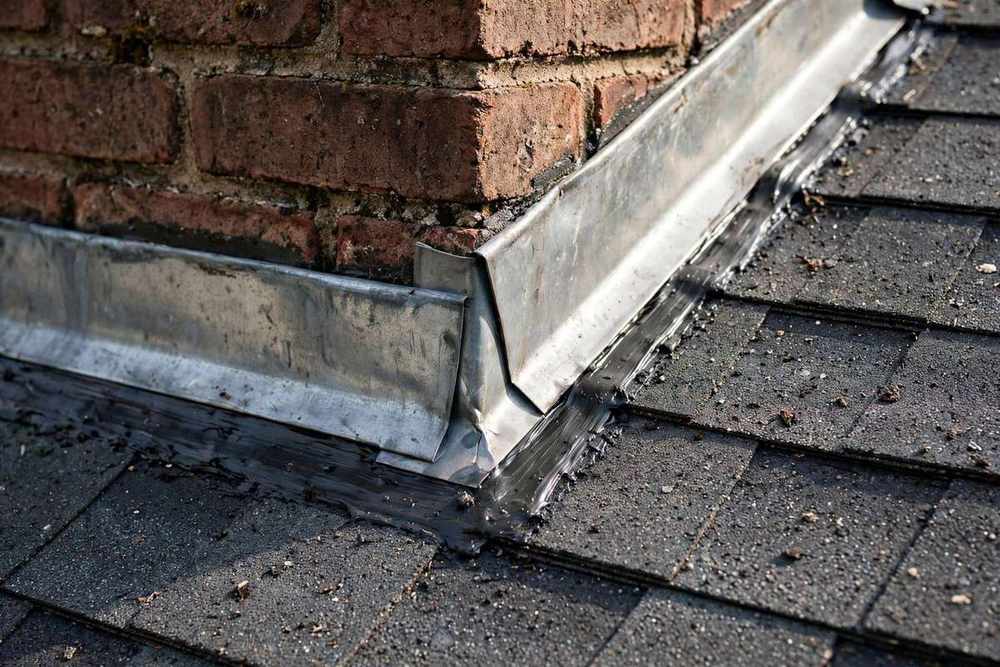
Where a chimney meets a roof, two materials meet at a right angle, and water has to be directed around the joint rather than into it. That job belongs to the flashing: step flashing woven into the shingle courses up each side, counterflashing set into the chimney mortar joints and folded down over the step flashing, and a saddle or cricket on the uphill side that splits the water around the chimney instead of letting it pool against the brick.
Any one of those can fail. Step flashing corrodes or lifts. Counterflashing pulls out of its mortar joint as the house moves. Sealant dries out in the heat and cracks. The saddle was never built, so water ponds against the uphill face. A leak detection and repair visit checks each of those in turn, because the stain on the ceiling tells you water is getting in, not which piece failed.
When it really is the chimney
Sometimes the chimney is the problem. Mortar joints open up with age and let wind-driven rain through the brick itself. A cracked chimney cap lets water down the flue and into the house. A missing cap lets rain in directly. The test is the pattern: flashing leaks show up as stains on the ceiling near the chimney, usually after rain, and they worsen over time. Chimney leaks often show as damp brick, efflorescence on the masonry, or water in the firebox. A roofer and a mason look at different things, and a good inspection tells you which trade you need before you pay either.
How a roofer fixes it
A proper chimney flashing repair is a rebuild, not a smear of sealant. The roofer removes the shingles around the chimney, inspects the decking and underlayment beneath, replaces the step flashing and counterflashing, rebuilds the saddle if the chimney is wide enough to need one, and re-lays the shingles around the repair. Sealant is the last step, not the first, and it is applied where two pieces meet, not spread across the joint as a substitute for the metalwork. That is why a tube of sealant from a hardware store rarely fixes a chimney leak for more than a season.
For tile roofs, the same principles apply with different details: the tile is lifted around the chimney, the flashing beneath is rebuilt, and the tile is re-laid. Our tile repair and salvage page explains the tile version. For homeowners in older central areas, where brick chimneys are part of the house's character, our Beacon Hill roofing page covers the bungalow-era chimneys common there.
Frequently Asked Questions
Why does my roof leak around the chimney?
Usually because the flashing has failed: step flashing that has lifted or corroded, counterflashing that has pulled out of its mortar joint, dried-out sealant, or a missing saddle on the uphill side.
Is the chimney itself ever the cause?
Yes. Open mortar joints, a cracked cap, or a missing cap can all let water in. The pattern of the damp tells a roofer which trade is needed.
Can sealant fix a chimney leak?
Rarely for more than a season. A proper repair rebuilds the flashing and re-lays the shingles around it. Sealant is the last step, not a substitute for the metalwork.
How does a roofer find a chimney leak?
By checking the step flashing, counterflashing, saddle and decking around the chimney in turn, and by tracing the stain uphill from the ceiling to the entry point.
Get help with roofing in San Antonio
Call Kbron Roofing at (254) 645-5833, Monday to Saturday, 6 AM to 8 PM, to schedule a chimney leak inspection in San Antonio. Call Kbron Roofing at (254) 645-5833 to schedule an inspection in San Antonio.